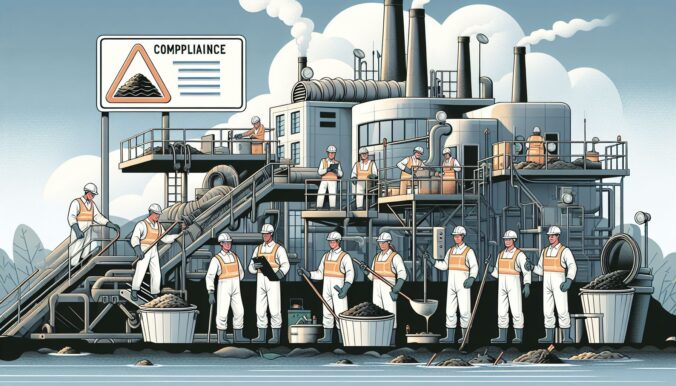
Since the onset of industrialization, managing waste by-products has been a continuous challenge for many industries. One particularly arduous by-product to handle is sewage sludge—a semi-solid by-product generated from sewage treatment plants. Sludge treatment and disposal are crucial processes, not only for maintaining optimal operations in sewage treatment plants but also for minimizing environmental impacts. The management of this waste is governed by stringent regulations, and non-compliance can lead to significant financial penalties.
Understanding Sludge: Its Characterization and Significance
Sewage sludge, also referred to as biosolids, is composed of organic material, bacteria, and trace amounts of heavy metals. As a by-product of wastewater treatment, sludge can vary in characteristics depending on the specifics of the source and the wastewater treatment process. The US Environmental Protection Agency (EPA) broadly categorizes sludge into two classes, Class A and Class B, based on their pathogen and heavy metal content.
Amid the varied waste by-products, why does sludge management matter so much? For one, improper disposal of sludge can lead to environmental pollution, with ground and surface water sources being especially vulnerable. Plus, it further enhances the risk of spreading pathogens, thus disrupting the natural ecosystem.
The Essence of Sludge Treatment
Sludge treatment is a multi-stage process, involving thickening, digestion, dewatering, and drying. Each step is crucial in its own regard, and accurate monitoring and process control can significantly improve the quality of the treated sludge.
Indeed, managing this by-product is not a walk in the park. It requires expertise, technological resources, and a strong commitment to adhere to regulations. This commitment is pivotal not only for complying with legal requirements but also for making a positive contribution to the environment. After all, properly treated sludge can be beneficially reused, generally in agriculture, landscape cultivation, and land reclamation processes.
Complying with Regulations: A Determinant for Successful Sludge Management
In the United States, the EPA has formulated comprehensive regulations under section 405(d) of the Clean Water Act (CWA). These regulations emphasize pollutant limits, management practices, and operational standards for sludge treatment, disposal, and reuse.
Moreover, several states have also established their standards that coexist with federal regulations. For example, South Carolina’s Department of Health and Environmental Control maintains stringent guidelines and standards for water quality, including the management of sludge. These South Carolina water quality standards are instrumental in fostering responsible practices for sludge treatment and disposal within the state.
Thus, understanding and adhering to these regulations is an integral part of successful sludge management. Non-compliance can lead to hefty fines and legal reprimands, painting the organization in a bad light. Therefore, it’s not only about doing the right thing—it’s about upholding an organization’s reputation and ensuring sustainable long-term operations.
From Regulations to Application: Strategies for Compliance
So, how should organizations approach these laws? Well, the first step is always understanding the regulatory landscape. Whether it’s the EPA rules or specific regional guidelines such as those in South Carolina, awareness is the main key.
Once organizations understand the laws, integrating them within their operational practices is the next step. This process involves constant monitoring and performing periodic audits to evaluate the effectiveness of current procedures. It would also entail modifying or tweaking strategies when necessary, and investing in worker training to keep everyone updated on compliance guidelines and protocols.
Organizations may also consider establishing partnerships with environmental consultancies and obtaining membership in industry associations. These bodies can provide frequent updates on policy changes, imminent regulations, and the best industry practices that ultimately assist in maintaining compliance.
The Road Ahead: Future of Sludge Management
While current practices in sludge treatment and disposal have indeed come a long way, the journey towards improved and sustainable sludge management is far from over. Emerging technologies such as thermal hydrolysis and anaerobic digestion offer promising potential for improving sludge treatment efficiency, generating renewable energy, and reducing associated costs.
Moreover, increased interest in the circular economy prompts the sustainable reuse of treated sludge in agriculture and land reclamation. Properly treated and monitored biosolids can enhance soil fertility and productivity, thus adding value to what is commonly viewed as waste.
In conclusion, sludge treatment and disposal are complex yet crucial processes. Regulatory compliance in this domain is not merely about following the rules—it’s about adopting a proactive approach towards environmental stewardship and sustainability. As technology advances and regulations evolve, the industry is well-poised to transform the perception of waste, providing a beacon of light for an environmentally-conscious future.