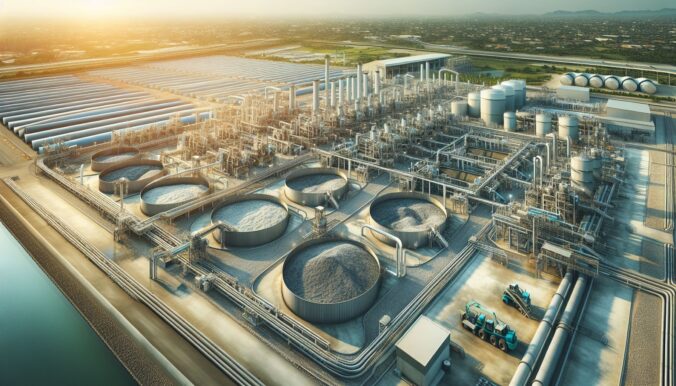
Unquestionably, sludge is one of the primary by-products of wastewater treatment, and managing this sludge effectively is a critical aspect of efficient wastewater processing. One of the most widely utilized methods of sludge management in wastewater treatment plants is the use of drying beds. So, what are sludge drying beds, how do they factor in wastewater treatment, and why are they so integral to effective sludge management?
Understanding Sludge Management
Before we delve into drying beds themselves, it’s crucially important to understand the broader context – sludge management. In essence, sludge is composed of a variety of unwanted residual particles suspended in water, including hapless organic matter, solids, chemicals, and even microorganisms. It’s estimated that the management of this sludge accounts for 25-50% of the total cost of wastewater treatment, underscoring its importance in the process.
Sludge management is a multifaceted coordination that involves four stages: thickening, stabilization, dewatering, and disposal or utilization. The aim is not only to treat the sludge safely and efficiently but also to do so cost-effectively. This is where the elegant simplicity of the sludge drying bed systems come into play.
The Role of Drying Beds in Sludge Management
Simply put, a sludge drying bed consists of an open traditionally rectangular bed of sand or other suitable granular material, over a helpful network of underdrain pipes and collection sumps. The main role of these drying beds is in the dewatering stage of sludge management. The fact that one third of the total volume of sludge is often water gives a clear idea of the value of an effective dewatering strategy and the role of the drying beds within this.
Given their cost-effectiveness (particularly in sites with ample solar capacity) and simplicity, drying beds remain a preferred technological choice in developing economies. The US Environmental Protection Agency has even published a manual detailing the step-by-step process of designing simple sludge drying bed systems, militating further for their efficiency and straightforwardness.
But like any other system in practice, they are not without their drawbacks. Physical constraints such as space requirements and variable climatic conditions can affect their operation. However, even with such hurdles, the utility of these humble systems in the grand scheme of wastewater treatment – and ultimately, global water security – cannot be overemphasized. Now that we’ve got the gist, let’s get into the nitty-gritty of how these sludge drying bed systems work.
The Mechanics of Drying Beds
The principle of a drying bed is built around the natural processes of percolation, evaporation, and drainage, leveraging gravity as the main driving force. When sludge is loaded onto the surface of the bed, water seeps through the permeable medium and drawn off via the underdrainage system. This kicks off the dewatering process.
Initially, the majority of the water removal is due to percolation. However, as the thickness of the sludge layer increases, the rate of percolation reduces, and evaporation begins to play a dominant role. Unsurprisingly, the efficiency of evaporation is highly dependent on the local climatic conditions. Sunny, windy, and low humidity environs favor higher evaporation rates, whereas cloudy, calm, and humid conditions dial down the drying efficiency.
With the water drawn away, the volume of the sludge diminishes, and it progressively consolidates and hardens, leaving behind a semi-solid residue. This residue can then be easily handled and transported for final disposal or further utilization.
Laying the Bed for Future Trends
The basic mechanism of sludge drying beds we’ve discussed is a proven traditional system. However, like all sectors, staying put seldom equates to progress in wastewater treatment, and innovation is the name of the game. Future enhancements in drying beds are likely to emerge from the intersection of advanced material science, environmental engineering, and renewable energy technologies.
For instance, the use of alternative bed materials, such as geotextiles, is steadily picking up steam. Geotextile tubes not only drastically reduce the spatial requirements, but their modular and portable nature is also a boon, especially in densely populated urban centers.
On the front-lines of renewable energy, solar drying beds are gaining traction for their low energy input and high sustainability quotient. Combining solar energy-based drying techniques with traditional drying beds can remarkably augment the drying process and reduce the total drying time.
Parting Thoughts
Wrapping up, drying beds are a testament to the unwavering ingenosity of human engineering. They are steadfast and dependable workhorses in the world of wastewater treatment, demonstrating that sometimes, simplicity may indeed be the ultimate sophistication. They may not be the most glamorous component in sludge management, but surely, without them, the gears of wastewater treatment would grind to a cumbersome halt. So, next time when you flush your toilet or empty your dishwater into the sink, spare a moment to appreciate these unsung heroes.