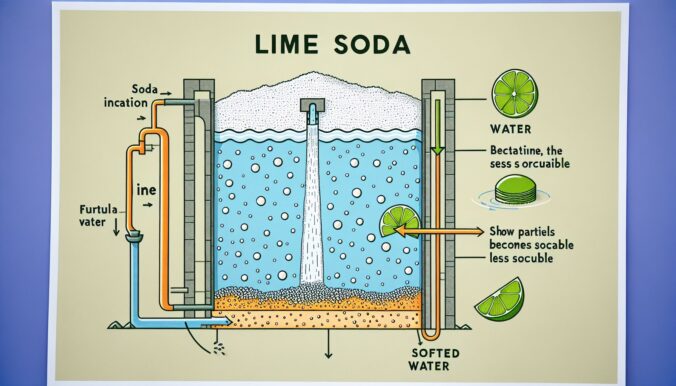
In an era replete with water scarcity, the relevance and significance of water softening processes, notably the lime soda process, cannot be overstated. Join me on a journey to understand this critical chemical phenomenon. Its specific details, practical applications, and inherent benefits contribute significantly to maintaining water quality globally.
Understanding the Basics of Water Softening
Before addressing the specifics of the lime soda process, let’s get grounded in the fundamentals of water softening. Ready? Let’s dive in.
Water softening, as the name implies, is a process that removes hardness from water. Hardness is usually the result of high concentrations of calcium (Ca) and magnesium (Mg) ions. These ions can cause an array of problems— from precipitates that clog pipes to the reduction of soap’s cleaners efficiency.
Now, fascinatingly, different types of water softening methods exist, such as ion exchange, distillation, and our star player, the lime soda process.
The Lime Soda Process: Breaking It Down
Lime soda is an age-old and still widely utilized method of water softening. The effectiveness of the lime soda process stems from its ability to precipitate calcium and magnesium ions from water, thus eliminating hardness.
Two primary chemical reactions underpin the lime soda method:
-
Lime or Calcium Hydroxide Reaction: To address carbonate hardness (temporary hardness), lime or calcium hydroxide (Ca(OH)2) is added to the water. The reaction between calcium forms insoluble precipitates, essentially removing hardness.
-
Soda Ash or Sodium Carbonate Reaction: For non-carbonate hardness (permanent hardness), soda ash or sodium carbonate (Na2CO3) is introduced. Similar to the lime reaction, this leads to the formation of precipitates and the subsequent removal of hardness.
Practical Applications of the Lime Soda Process
In exploring the practical applications of the lime soda process, it’s interesting to note that industrial and municipal water treatment plants lean towards employing lime soda softening methods. This stems from the process’s capacity to handle large volumes and high levels of hardness, while also being cost-effective.
For instance, the lime soda process is notably effective in mitigating the impacts of “water hardness” within large-scale boiler operations. Elevated levels of calcium and magnesium in boiler feedwater can lead to scaling— a substantive problem contributing to energy inefficiency and potential equipment damage. Through the lime soda process, these hardness-causing ions are eliminated, thus protecting multi-million dollar industrial boiler systems from scale accumulation.
These real-world applications of the lime soda method offer proof positive of its efficacy in industrial water treatment, reflecting both its practicality and relevance in our everyday lives.
Advantages of the Lime Soda Process for Water Softening
Indeed, the know-how of the lime soda process is essential, but why? What specific advantages does it offer? Why is this method preferred over other water softening alternatives?
Simply put, the lime soda process is both cost-effective and efficient. It uses readily available, relatively inexpensive chemicals— lime and soda ash— to treat significant volumes of water successfully. Furthermore, it’s capable of handling extremely hard water, a feat that not all methods can achieve.
Notably, the lime soda process also reduces the concentration of heavy metals and certain organic compounds in water. This often overlooked benefit amplifies the process’s importance in maintaining overall water quality.
Navigating Challenges: Potential Drawbacks of the Lime Soda Process
Like any method, the lime soda process isn’t free from challenges. It produces large volumes of sludge due to the amount of precipitate formed during the process. This sludge must be carefully managed and disposed of, often requiring additional treatment for environmental compliance.
The process also requires significant control and constant monitoring to ensure that the correct amounts of lime and soda ash are added— too little and the water remains hard, too much and the excess chemicals can cause other water quality problems. This need for careful oversight adds to the complexity and cost of the process.
Innovations and Future Trends in Lime Soda Water Softening
As the 21st century marches on, water quality remains a paramount concern worldwide. The unique requirements of water softening at the municipal and industrial level call for continuous innovation in lime soda softening methods.
Emerging trends lean towards minimizing sludge production and maximizing process efficiency, with advancements in chemical delivery systems and real-time monitoring technologies playing key roles.
By investing in these innovative solutions, industries, and municipalities alike can ensure the continued provision of high-quality water, even as global water scarcity intensifies.
Concluding Thoughts
The lime soda process, with its intriguing chemistry and practical applications, stands as a testament to mankind’s resourcefulness at solving complex environmental problems. Despite its challenges, the process’s overall efficiency and cost-effectiveness pave the way for its continued relevance in water softening.
As we explore the realms of water treatment further, the importance of improving and refining processes such as lime soda softening will only increase. For now, it remains a crucial tool in our ongoing quest for clean, softened water, contributing significantly to maintaining and improving global water quality.