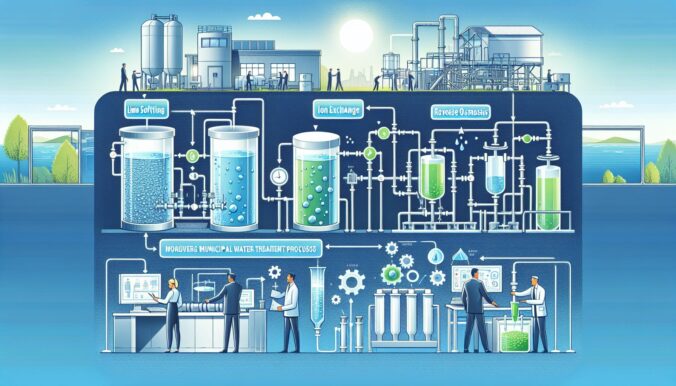
In the realm of municipal water treatment, the removal of hardness presents a unique challenge. Hard water, which contains high concentrations of calcium and magnesium, can lead to various issues such as scaling in pipes, appliances, and industrial equipment. It’s also unfriendly to soap, making daily chores like washing dishes or doing laundry an uphill battle. Let’s get into the nitty-gritty of hardness and discuss thorough methods to de-hardening water.
Understanding Hardness in Water
Water hardness derives mainly from two minerals – calcium and magnesium. Just to give you an idea, according to a research study by the U.S. Geological Survey, water containing over 121 milligrams per liter of these minerals is considered hard. It’s important to dwell on the fact that while these minerals are not harmful to health, they impede the proper function of soaps and detergents. This interference could undermine the pursuit of cleanliness in households and industries.
Chemical Precipitation: A Trusted Method
Particularly prevalent in municipal water treatment plants is the chemical precipitation technique. It comprises spreading lime (calcium hydroxide) and soda ash (sodium carbonate) in water to convert hard minerals into sediment, which is ultimately filtered out. This method is cost-effective and can remove 90% to 95% of hardness. However, it’s no secret that it generates sludge which necessitates effective disposal systems.
Ion Exchange: A Highly Effective Solution
Ever wondered about the science behind water softeners? They leverage an ion exchange process. Here, contaminated water spreads through a bed of synthetic resin beads. These beads attract and retain hardness-causing minerals, swapping them with sodium ions. Ion exchange systems can entirely remove hardness, making them an attractive option. Nonetheless, they are not typically used in large-scale municipal projects due to high operation and maintenance costs.
Reverse Osmosis: The Modern Approach
In recent years, the use of reverse osmosis (RO) systems in municipal water treatment has seen a significant rise. These systems employ semi-permeable membranes to remove nearly all hardness from water. However, they do pose some issues. RO systems require high pressure, are energy-intensive, and produce briny wastewater that poses disposal challenges.
It’s noteworthy to mention the Missouri water resources, an established authority tackling the removal of hardness in water. Their work stresses the importance of municipal water treatments and how such procedures can make water safe and useable for the state’s residents.
Nanofiltration: The Future of Hardness Removal
This is not your everyday water treatment method. Nanofiltration involves filters with tiny pores that effectively remove hardness-causing ions from the water. What makes nanofiltration noteworthy, besides removing hardness, is its ability to retain beneficial minerals in the water, whereas RO strips all minerals. Despite the promise, it is a relatively new technology, and its high cost can be prohibitive for wide-scale applications.
Assessing and Combining Removal Methods
It’s not a one-size-fits-all situation when it comes to hardness removal in water. Factors like water composition, cost, and sustainability play a crucial role in deciding the appropriate method. Often, a combination of methods is used. In many municipal setups, chemical precipitation works hand-in-hand with ion-exchange or RO systems. This combo ensures that other water constituents like turbidity and microbes are thoroughly addressed.
The journey of removing hardness from water is indeed vast and multifaceted. There’s no magic bullet that will work in every situation. The range of techniques from chemical precipitation to nanofiltration illustrates the complexity of the problem. But as we advance in technology and deepen our understanding of water chemistry, the promise of providing soft, clean, and safe water to everyone takes a step closer to reality. After all, isn’t that the ultimate goal of municipal water treatment?