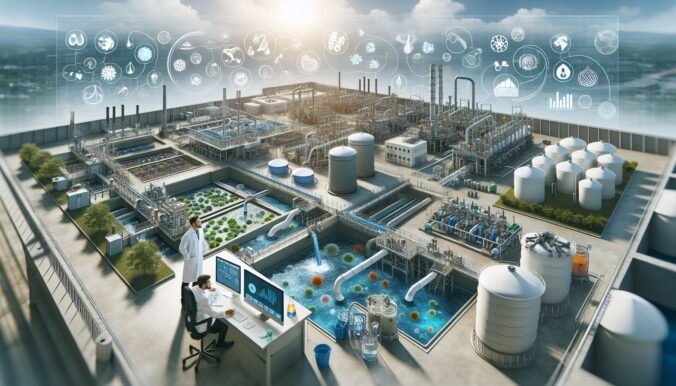
The issue of water cleanliness and safety is one of the most significant concerns globally. The World Health Organization (WHO) reports that one in three people worldwide lacks access to safe drinking water^1^, a dire statistic that underlines the need for effective water and wastewater treatment solutions. This article dives into the technological, legal, and practical resources available for water treatment, how they’re improving public health, and what future advancements hold in store.
Overview of Water Treatment Solutions
Water treatment solutions range from simple home filtration systems to complex municipal water treatment plants. The goal is to render water — whether sourced from lakes, rivers, wells, or reservoirs — safe for human use and consumption.
Municipal water treatment plants often rely on a multi-stage process, encompassing coagulation, sedimentation, filtration, and disinfection^2^. While these large-scale installations are capable of treating vast quantities of water, they require substantial investments in infrastructure and maintenance. Not all regions, especially in emerging economies, have the resources necessary for these extensive systems.
Home filtration systems, which include activated carbon, reverse osmosis, and UV light technology^3^, offer a more decentralized and scalable solution – and yet, they come with their own challenges, including regular filter replacement and higher upfront costs.
The pressing question, therefore, is how can both large-scale infrastructures and individual households access effective water treatment resources? One possible answer could be found on a dedicated platform such as waterandwastewater.com.
Role of Wastewater Treatment in Protecting Public Health
The flip side of the water treatment coin is wastewater treatment. In simplest terms, this involves the conversion of used water into an effluent that can be safely released back into the environment or reused.
The key stages of wastewater treatment include pre-treatment, primary treatment, secondary treatment, and tertiary treatment^4^. These stages collectively remove solid waste, organic compounds, and dangerous pathogens from wastewater. Key technologies in this sector include mechanical and biological processes, disinfection methods, and advanced filtering.
But why is this so significant?
Imagine what might happen if untreated wastewater was discharged directly into rivers or oceans. Not only would this pollute those water bodies, but it could also lead to harmful algal blooms, depletion of oxygen levels, damage to marine life, and pose significant health risks to humans^5^.
Wastewater management is critical to break this pollution cycle, acting as a shield for public health and for our environment. However, achieving effective wastewater management requires access to technical knowledge and operational methodologies. Those in the field, or wishing to learn more, could visit the water treatment resources website, which offers a wealth of essential resources.
Future Trends in Water and Wastewater Treatment
The field of water and wastewater treatment is not static. Like many industries, it’s continually evolving, driven by the need for increased efficiency, affordability, and sustainability. What are these trends, and how are they poised to shape the future of this crucial sector?
Innovation in the sector is pushing towards smaller, modular systems that can offer the same efficiency as conventional methodologies but require less space and infrastructure. Moreover, these systems are often more sustainable, as they tend to use less energy and generate less waste^6^.
Advanced technologies are also making a significant impact. Real-time monitoring systems powered by IoT devices are becoming increasingly prevalent, while new materials and breakthroughs like graphene filters offer promising possibilities for both water and wastewater treatment^7^.
Final Thoughts
Access to safe, clean, potable water is a fundamental human right. However, ensuring this right means grappling with a host of challenges: technical, financial, socio-political, and environmental. Dedicated resources such as waterandwastewater.com, along with cutting-edge technologies and committed professionals, are critical to this mission.
The field of water and wastewater treatment represents a delicate, yet vital balance between protecting public health and preserving our planet’s most precious resource — water. Let’s remember, the choices we make today will inform not just our present, but also our future sustainability.