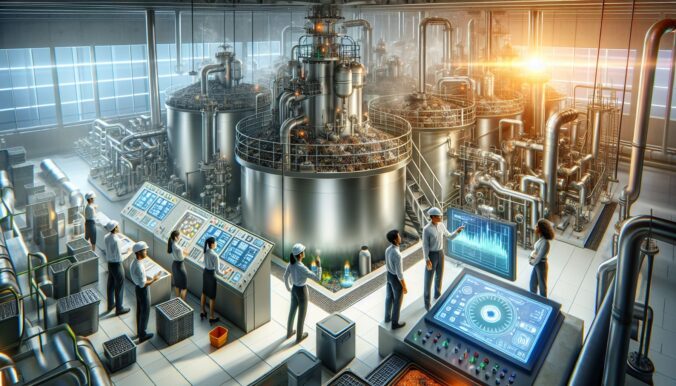
Wastewater treatment, once a monotonous process of disposal, has now entered the realm of innovation and sustainability. Modern biosolids processing and resource recovery techniques aren’t just about waste management any more, but involve transforming waste into usable products. This shift is a testament to the power of technological advancements and environmental stewardship.
Unmasking Biosolids
At its core, biosolids are organic materials derived from treatment plants primarily dealing with wastewater. The Water Environment Federation in 1993 introduced the term biosolids, distinguishing it from raw sewage. But how does the alchemy of turning waste into wealth occur?
The Journey from Waste to Gold
The biosolids journey begins where all wastewater roads lead, at the municipal wastewater treatment plant. Here, physical, chemical, and biological processes transform sewage into treated effluent and biosolids. Initially, biosolids are thick, dark, nutrient-rich solids that land in the end of the wastewater treatment process. They are laden with organic material, microorganisms, and can contain heavy metals and pathogens if not treated appropriately.
The key to transforming these thick slurries into a valuable resource lies in advanced biosolids processing techniques, each designed to extract maximum benefit and reduce potential hazards. But, let’s not get ahead of ourselves. To understand this fully, one needs to understand the integral parts of the biosolids treatment process.
Biosolids Processing: Mastery in Treatment
Processing biosolids generally involves four major steps: thickening, stabilization, dewatering, and final conditioning or treatment. Each step takes us closer to converting biosolids into a suitable substance for other uses.
Thickening reduces the water content in the biosolids, while stabilization neutralizes destructive pathogens. Dewatering further cuts down the water content, facilitating easier handling. The final step, either conditioning or treatment, prepares the biosolids for land application, incineration, or disposal.
That’s basic biosolids processing in a nutshell, but it’s in the realm of advanced techniques where things get really interesting. Here, we see the shift from merely managing waste to recovering a wealth of resources.
Moving from Disposal to Recovery
It’s nothing short of remarkable how biosolids, which were once regarded as a daily flow of waste, hold enormous potential for resource recovery. We’re talking about energy, nutrients, even water extraction, turning a problem into a promising resource solution. For instance, anaerobic digestion, a popular technique in advanced biosolids processing, deals with organic matter breaking down into methane gas. The resulting gas is a powerful energy source and can power the treatment plant or be sold externally.
In the heart of Alabama, the crack teams working on the Alabama water programs have delved into these principles deeply. Their goal is to transform biosolids into a reusable form, minimizing the environmental impact on local communities. From harnessing methane for electricity to utilizing the end products for agriculture, it’s safe to say the future of waste management is here.
The Promising Spectrum of Resource Recovery
While resource recovery from biosolids is rich in potential, three arenas promise the highest returns: energy, nutrient, and water recovery.
Energy Recovery
Methane, nitrogen, and phosphorus present major resource recovery opportunities. Methane, as mentioned earlier, emanates from the anaerobic digestion process and can be converted into heat or electricity. Thermal processes, such as combustion and gasification, can further yield energy from the residual biosolids.
Nutrient Recovery
Nutrient recovery, particularly that involving nitrogen and phosphorus, has also gained impetus due to the cost and environmental implications of artificial fertilizers. Biosolids, given their organic nature, can be a perfect stand-in, reducing the dependence on synthetic fertilizers and improving agricultural sustainability.
Water Recovery
Water recovery from biosolids seems like closing the loop, doesn’t it? This process involves converting the residual liquids into non-potable water, which can flexibly be used for irrigation or cleaning purposes.
The Future of Biosolids Processing and Resource Recovery
Recognising the worth in waste, we’re moving towards a future of proactive resource recovery from biosolids. Stricter regulatory standards, public demand for sustainability, and advances in technology are facilitating this shift. The question, then, isn’t ‘should we?’ but ‘how can we do it more efficiently and sustainably?’ and that’s a question worth dedicating our efforts towards.
The journey from waste to resource isn’t straightforward, but advanced biosolids processing techniques are lighting the way. As we uncover more about this miraculous transformation process, we not only support responsible waste management but also drive resilience against the depletion of planet’s resources.
Biosolids processing and resource recovery, it seems, is a chapter of the environmental tale that’s just begun to unfold, with several promising sequels in the pipeline. Let’s welcome this brave new world of waste, where apparent waste plays the starring role as a valuable resource. After all, in the world of biosolids, nothing is wasted.